Identity
Resolve the exact fiber or yarn name, form, polymer family, linear density and intended conversion process.
Material review services
Service begins by fixing the product identity and the downstream context. The work does not promise supply, capacity or performance; it organizes the questions and evidence a buyer should resolve with the current official product contact.
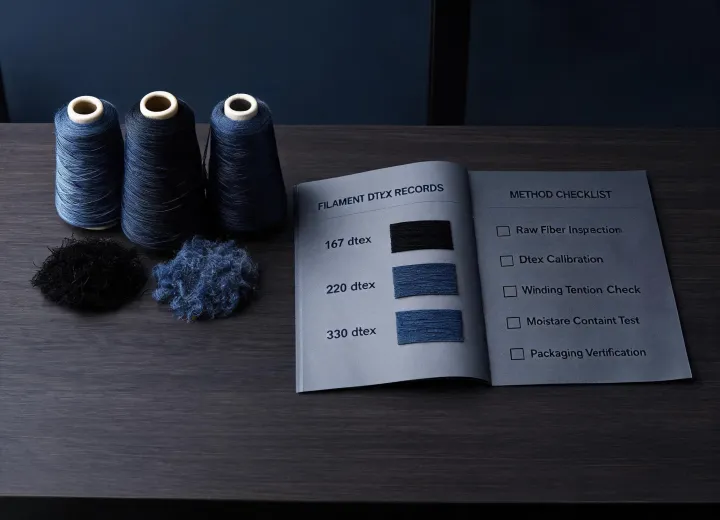
Resolve the exact fiber or yarn name, form, polymer family, linear density and intended conversion process.
Translate broad performance language into a named test, specimen condition and acceptance requirement.
Keep recycled, textile-recycled, bio-based and mass-balance pathways distinct in both sourcing and communications.
Match technical and claim documents to the product, site, date and proposed supply configuration.
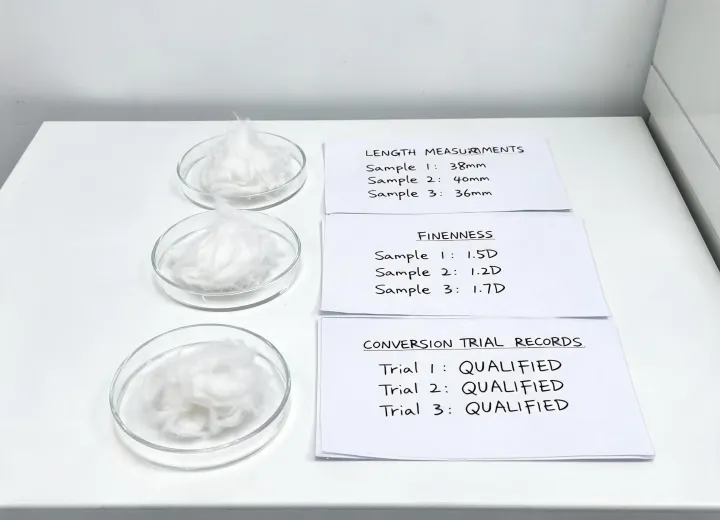
Qualification scenario
Background: a spinning team needs a repeatable input for a defined yarn construction but receives a brief that only says “recycled polyester.” Process: the team records fiber fineness, cut length, shade, route evidence, spinning conditions and the test methods required on the converted yarn. Result: comparison becomes traceable to a named product and trial, while any recycled-content statement stays separate from processing performance. This is an illustrative review method, not a reported customer case or guaranteed outcome.
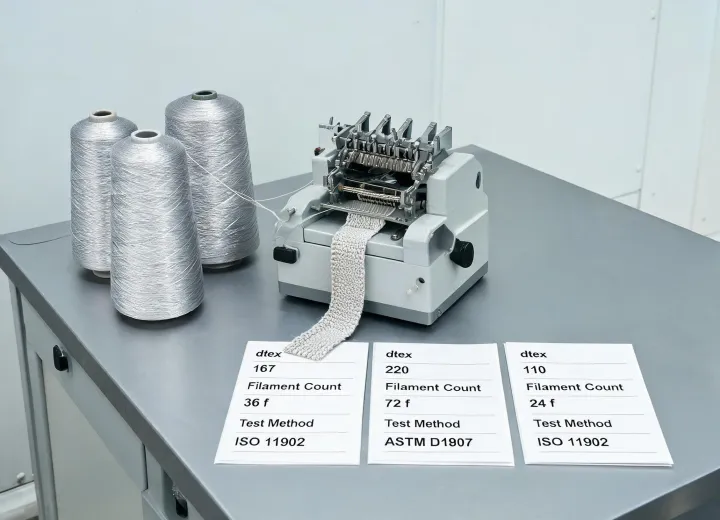
Conversion scenario
Background: an engineering team must compare two constructions for processing stability and end-use behavior. Process: it defines dtex, filament configuration, tenacity, elongation, twist or texture, conditioning and a downstream trial. Result: the purchase question becomes a reproducible matrix rather than a ranking based on adjectives. Results remain specific to the tested product, conversion settings and specimen condition.
Include material form, denier or dtex, performance method, route, color, end use, conversion process, quantity and timing. If a document is essential, name its intended scope rather than requesting a generic certificate.